


Commercial painting can restore faded walls and support a more consistent property image. The main commercial exterior painting benefits include surface care and planned upkeep. Compatible coatings can reduce direct exposure to sunlight and rain. Yet paint only works well over sound and well-prepared surfaces. Understanding commercial exterior painting benefits helps owners plan work based on real property needs.
This guide explains the main gains and warning signs. It also covers surface prep and coating types. You will learn what affects cost and project time. The guide also explains how to compare contractors. These facts can help you request a clear scope. They can also reduce poor product choices and rushed work. Good planning starts with a full site check.
What Is Commercial Exterior Painting?
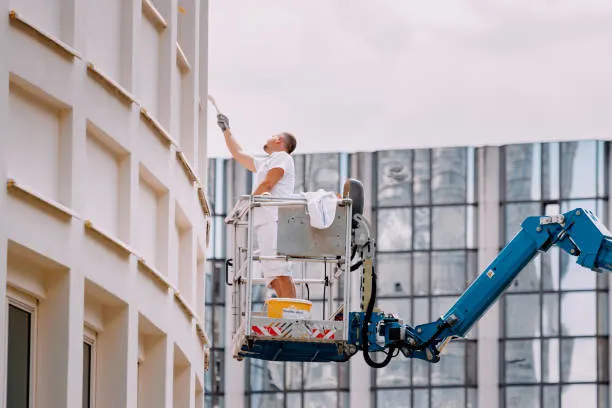
Commercial exterior painting prepares and coats outside surfaces on business properties. These sites include shops and offices. They also include warehouses and health care sites. Other sites include hotels and food service firms. A smooth wall texture can help the finished coating look more even when the surface has been properly prepared.
A typical commercial exterior painting project may include:
- A complete site check
- Surface washing
- Loose paint removal
- Small surface repairs
- Sanding rough edges
- Failed caulk removal
- Primer where needed
- Coating use
- Final review
- Site cleanup
The contractor should match each product with the base surface. That base surface is called the substrate. Common types include wood and metal. Others include brick and stucco.
Painting does not replace major repairs. Active leaks and failed drains require separate work. Large cracks also need expert review before any coating begins.
What Are the Main Benefits?
New paint can correct faded colors and worn surface areas. It can also cover sound repairs after proper prep. The finished building then presents a more even color across each wall. Proper fixture placement can also help prevent anchor failure when wall-mounted items are installed.
Creates a More Consistent Property Appearance
New paint can correct faded colors and worn surface areas. It can also cover sound repairs after proper prep. The finished building then presents a more even color across each wall.
Large buildings may fade at different rates. Walls with strong sun often wear unlike shaded sides. Each wall should receive its own condition check. This helps the contractor plan prep based on actual wear.
Supports Brand Presentation
Business exterior painting can align walls with current brand rules. Doors and trim may carry selected brand colors. Main walls can use calm support shades around signs.
The goal is not to place one bright brand color everywhere. A set color plan can guide each surface choice. It can also keep several business sites visually linked. The final color list should record every approved color and product.
Reduces Direct Weather Exposure
Compatible paint forms a film over prepared exterior surfaces. That film can limit direct contact with rain and sunlight. It may also slow normal surface wear from changing weather.
No normal paint makes a building fully weatherproof. Small gaps can still admit water behind the coating. Failed joints and open cracks need repair first. The coating must also suit local heat and moisture levels.
Supports Planned Maintenance
Surface checks may reveal small issues before new paint is applied. Workers may find cracked caulk or loose old paint. They may also find early rust and moisture marks.
These signs should guide repairs before coating work begins. Covering them with paint only hides the concern. A sound maintenance plan links inspection with repair and coating work. This approach helps owners track surface condition over time.
Simplifies Future Property Care
Clear product records can make later touchups easier. The record should list each color and sheen. It should also include the primer and finish product.
Keep records for every wall and surface type. Future teams can then check product fit before repairs. This helps avoid guesswork when several similar colors appear across one property. Physical samples should still be reviewed before larger future work.
Maintains a Professional Business Image
A clean and even exterior shows that the property receives regular care. This is useful for offices and retail sites. It also matters for rental and mixed-use buildings.
Paint alone cannot raise sales or bring more visitors. Service and location still shape business results. A maintained exterior simply supports an orderly and cared-for site image.
What Signs Show a Need for Repainting?
A commercial building may need new paint when its coating fades or peels. Chalking and poor adhesion also suggest that an inspection is due. Small wall defects should be addressed through suitable drywall repair before new coatings are applied.
Look for these common signs:
- Paint peels or flakes
- Colors fade in uneven areas
- Chalk-like dust forms
- Bare material becomes visible
- Metal shows surface rust
- Caulk splits or pulls away
- Wood feels soft
- Moisture marks appear
- Old repairs remain visible
- Brand colors have changed
- The finish no longer cleans well
Chalking is a fine dust left as a coating wears. Light chalking does not always require instant repainting. Heavy chalk can affect the bond of new products.
Softwood needs repair before any commercial building painting starts. Active leaks also require proper fixes. Major cracks and broad rust may need added review. New paint cannot correct its source.
How Does Exterior Painting Protect Building Surfaces?
Exterior paint forms a protective film over sound and prepared surfaces. This film can limit moisture entry and direct sun exposure. It can also slow wear while the coating stays intact.
The substrate affects how this film performs. Porous masonry may hold moisture within its surface. Metal can rust under a failed finish. Wood moves as moisture levels change. Each material, therefore, needs suitable prep and products.
Paint cannot seal a major structural crack. It also cannot stop an active roof or wall leak. Failed caulk needs removal and new material. Rust requires cleaning and a compatible primer. Rot or decay needs repair rather than a thicker paint coat.
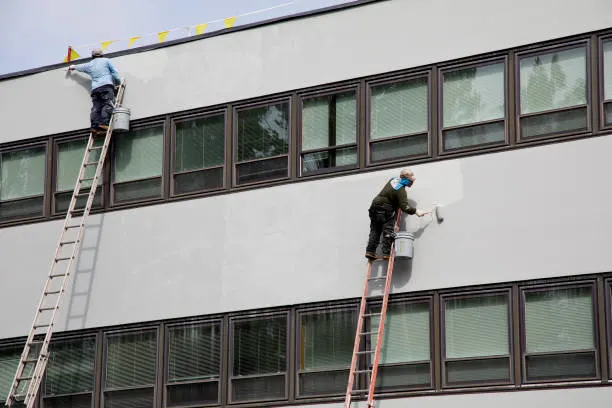
Product fit also affects adhesion. Adhesion means how well the coating stays bonded. Old, unknown coatings may need a bond test before full application.
How Does the Commercial Painting Process Work?
Workers prepare surfaces before applying the selected coating. Cleaning, scraping, sanding, repairs, and priming may be needed based on surface condition. These steps are also important when planning residential painting for properties that need both surface care and a fresh finish.
Step 1: Inspect the Building
The contractor checks each surface and the current coating condition. The review should cover moisture and visible repairs. Height and access needs must also be recorded. Nearby cars and walkways can affect the work plan.
Step 2: Define the Project Scope
A written scope should list all painted surfaces. It should also identify excluded areas and required repairs. Products and colors need clear names. The scope should state coat counts and cleanup duties. It should also explain the planned schedule.
Step 3: Protect Nearby Areas
Workers protect signs and windows before prep starts. Doors and paths may need covers or access control. Plants and outside gear need suitable protection. Cars should move away from spray or wash zones.
Step 4: Clean the Surfaces
Cleaning removes dirt and loose surface matter. It may also remove chalk and organic growth. The chosen method must suit the substrate. Too much water force can harm wood or soft masonry.
Step 5: Complete Repairs and Preparation
Workers scrape loose paint and sand rough coating edges. Failed caulk should be removed before fresh caulk is placed. Metal rust needs proper cleaning and treatment. Suitable small defects can then be repaired.
Step 6: Prime Required Areas
Bare and porous areas may require primer. Repaired or stained spots may also need it. Metal often needs a primer made for its condition. The selected finish must work with that primer.
Step 7: Apply the Coating
Professional exterior painters may use brushes and rollers. Spray tools may suit some large or complex surfaces. The method depends on the site and coating system. Each coat needs the stated dry time.
Step 8: Inspect and Record the Work
The final check covers edges and color match. It should also review missed areas and surface coverage. The team should complete the listed fixes and cleanup. Owners should receive the final product and color records.
Which Coating Works for Each Exterior Material?
The substrate should guide both preparation and coating selection.
| Surface | Main Concern | General Coating Need | Preparation Focus |
| Stucco | Cracks and moisture | Breathable compatible finish | Cleaning and crack checks |
| Concrete | Pores and moisture | Masonry coating | Cleaning and moisture tests |
| Brick | Vapor movement | Suitable masonry finish | Joint and moisture review |
| Wood | Water and movement | Exterior wood coating | Decay repair and sanding |
| Metal | Rust | Compatible primer and finish | Rust care and cleaning |
| Painted surface | Product fit | Finish matched with old paint | Bond testing |
This table offers general guidance only. Existing surface conditions can change the right choice. Always review product data before selecting protective exterior coatings.
Exterior Paint vs Protective Coating Systems
Standard paint and special coating systems serve different needs.
| Option | Main Purpose | Common Application |
| Exterior acrylic paint | Color and weather resistance | Siding and stucco |
| Masonry coating | Cover porous mineral surfaces | Concrete and block |
| Elastomeric coating | Flexible film for suitable masonry | Selected stucco |
| Direct to metal coating | Rust resistance and finish | Prepared metal |
| Reflective coating | Solar reflection in approved systems | Selected roofs |
| Intumescent coating | Tested fire protection system | Named structural uses |
Special systems are not basic exterior paint. Reflective products require an approved surface and planned system. Fire protection coatings need technical plans and skilled use. A contractor should follow all product rules and project specs.
How Often Should a Commercial Exterior Be Repainted?
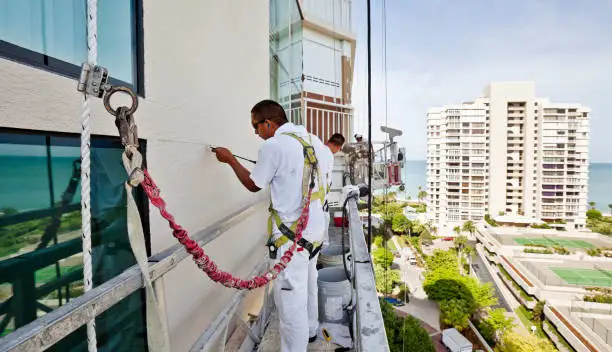
No single repaint plan suits every commercial building. Timing depends on the surface and the old coating. Climate and sun exposure also change coating wear. Prior prep has a strong effect on service life.
Inspect the building exterior each year. Check faded areas and chalking. Look for open cracks and loose paint. Failed caulk and early rust also need attention. Moisture marks may point toward a separate building issue.
Do not wait for broad peeling before taking action. Small local repairs may prevent wider coating loss. Keep all findings in an exterior paint maintenance record. This record can guide repair and budget plans.
What Affects Commercial Exterior Painting Costs?
Costs depend on surface area and access. Prep needs and coating types also shape the final commercial paint estimate.
Common cost factors include:
- Building size
- Wall height
- Lift or scaffold access
- Substrate type
- Old coating condition
- Repair needs
- Cleaning methods
- Primer needs
- Coating system
- Color count
- Coat count
- Work gear
- Operating hours
- Weather delays
- Site protection
- Labor needs
A tall building may require lift gear and traffic control. Peeling walls often need more scraping and cleanup. Complex trim can add time without adding much wall area.
Request an onsite check before comparing bids. A broad price range cannot show actual repair or access needs.
How Can Businesses Reduce Painting Disruption?
Businesses can reduce disruption through phased work and clear daily plans. The contractor should first review entrances and customer paths. Delivery times and parking needs must also shape the schedule.
Some work may occur outside peak business hours. This depends on light and noise needs. It also depends on the weather and product dry times. Entrances should never close without clear notice and another planned route.
Move vehicles away from active work zones. Set daily cleanup duties in writing. Staff should receive schedule updates before each work phase. Keep one contact person available for urgent site questions.
Not every business can remain fully open. Access and coating needs may require short area closures.
How Should You Choose a Commercial Painting Contractor?
Choose a commercial painting contractor based on relevant work and a clear written scope. Check actual skills rather than judging the company by labels alone. A contractor should also understand the preparation and product needs involved in interior painting when indoor areas are included in a wider property project.
Review these details:
- Similar business projects
- Current insurance
- Local license needs
- Full written scope
- Exact prep steps
- Product details
- Access gear
- Site lead duties
- Property protection
- Work hour planning
- Client references
- Warranty terms
- Final review
- Change order rules
Ask for real photos from similar work. Confirm who will manage the site each day. The bid should explain how new defects affect cost. It should also state how the weather changes the schedule.
A mainly home-based painter may still have proper commercial skills. Judge the staff and gear based on your building’s needs.
Common Commercial Exterior Painting Mistakes
Small planning errors can cause poor adhesion and scope disputes.
| Mistake | Why It Causes Problems | Better Approach |
| Skipping inspection | Hidden flaws remain | Check every surface |
| Painting dirty walls | Adhesion may weaken | Clean the substrate |
| Ignoring moisture | Failure may return | Fix the moisture source |
| Coating over rust | Rust may continue | Treat and prime metal |
| Using the wrong product | The finish may fail | Confirm product fit |
| Ignoring weather | Drying may suffer | Follow product limits |
| Taking a vague estimate | Scope disputes may grow | Use written details |
| Skipping maintenance | Small flaws may spread | Inspect each year |
Cheap paint is not the only source of coating failure. Weak prep can ruin a suitable product. Applying paint outside stated weather limits may also reduce performance.
Questions to Ask Before Hiring
Ask each bidder the same clear questions:
- Which surfaces are included?
- What preparation will you complete?
- Which repairs are excluded?
- Which products will you use?
- Does the scope include primer?
- How many coats are planned?
- How will you protect site users?
- What access gear is needed?
- How will the weather affect timing?
- Who will lead the work?
- What can change the price?
- Does the price include cleanup?
- What does the warranty cover?
- Will we receive color records?
Written answers make bid comparison easier. They also reduce unclear terms after work begins.
Final Thoughts
Commercial exterior painting can renew faded finishes and support planned surface care. Results depend on proper repairs, careful preparation, and coatings matched to each substrate. Rockstar Painting can help with planned exterior painting when the surface is ready for coating. Owners should inspect exterior walls for peeling, moisture, failed caulk, and corrosion before work begins. Accurate product and color records can also simplify future maintenance.
Compare contractors through relevant project experience, preparation standards, and written scope details. If your property shows fading or coating failure, contact Rockstar Painting Denver for a complete assessment. Request written information covering repairs, products, access, scheduling, cleanup, and final review.
Frequently Asked Questions
Most sites need new paint every five to seven years. Sun, rain, and dust can harm old coats with time. A fresh coat can keep your site bright and neat. This step can help you hold true long long-term gain.
High-grade acrylic paint holds strong in the sun and rain. Some coats have a deep seal that blocks harsh heat. These coats stay firm for many years. Your team can guide you to the best pick.
Yes, fresh paint can lift foot flow in a clear way. A bright front can draw more eyes and build warm trust. People often step in when they sense neglect.
Bold tone works well for trust. Soft tone works well for a calm feel. Pick colors that match your brand’s feel. This helps people recall your site with ease.
Fresh paint can shape strong first impressions. Clear tone can lift the worth of your site. Buyers trust sites that show neat upkeep. This can help you gain more value.