


Left unprotected, outdoor wood doesn’t stay the same for long. Sun exposure fades its color, repeated wetting swells and dries the grain over and over, and small surface cracks eventually turn into larger structural problems. Understanding the real deck staining benefits means looking past the idea that stain is just a finishing touch, because the right product applied correctly does real work protecting the wood underneath.
Staining a deck is less about achieving a particular color and more about giving the wood a fighting chance against conditions it wasn’t built to withstand on its own. From moisture resistance and UV protection to easier long-term maintenance and a more finished appearance, each of these advantages plays a role in how long a deck actually lasts before major repairs become necessary.
Why Deck Staining Matters for Long-Term Wood Protection
Homeowners stain their decks for one central reason: exposed wood left to face rain, sun, and temperature swings on its own tends to deteriorate far faster than wood given some form of protective barrier. Stain can support moisture resistance, reduce UV-related fading, improve overall appearance, and contribute to longer-term wood preservation. Before looking at each of these benefits individually, it helps to understand how stain actually interacts with wood and why untreated decking struggles under everyday outdoor exposure.
How Stain Creates a Protective Layer on Wood
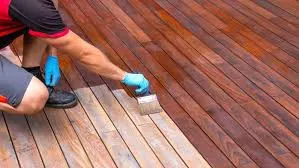
Deck stain penetrates into the wood fibers and, depending on the product, also forms a thin surface layer that helps reduce how much water and UV light reach the wood directly. This combination of absorption and surface protection is what allows a properly applied stain to reduce exposure to many of the conditions that accelerate outdoor wood damage.
1.2 Why Unprotected Deck Wood Deteriorates Faster
Wood left without any protective finish absorbs rain and humidity directly into its fibers, then dries out again under direct sun, and that repeated cycle of swelling and shrinking gradually weakens the wood’s structure. Add in temperature swings and daily foot traffic, and untreated decking tends to show cracking, graying, and surface roughness far sooner than a stained equivalent.
1.3 How Staining Supports Long-Term Wood Preservation
Consistent staining slows the rate at which exposed wood loses its structural quality, which in turn reduces how often boards need significant repair or full replacement. It isn’t a permanent fix, but as part of a regular maintenance routine, it meaningfully extends how long a deck stays structurally sound and visually presentable.
How Deck Staining Shields Wood From Moisture Damage
Among the various deck staining advantages, moisture protection is arguably the most important, since repeated exposure to rain and humidity is one of the fastest ways outdoor wood breaks down. Left unaddressed, that moisture contributes to swelling, cracking, warping, and eventually mildew or rot. Stain doesn’t make wood waterproof, but it does meaningfully reduce how much water penetrates the surface over time.
2.1 How Stain Helps Reduce Moisture Absorption
A properly applied stain limits how much water soaks directly into exposed wood fibers, which reduces the swelling that occurs every time the deck gets rained on or exposed to heavy humidity.
2.2 Why Moisture Protection Helps Prevent Wood Deterioration
Reducing repeated moisture exposure helps limit the conditions most closely associated with cracking, warping, and eventual rot, since wood that isn’t constantly absorbing and releasing water holds its shape and strength considerably longer.
2.3 Where Water Protection Matters Most on a Deck
Horizontal boards that collect standing water, exposed end grain that absorbs moisture more readily than the flat surface, stair treads, and railings all tend to need particular attention during staining, since these areas typically take on more water exposure than the rest of the structure.
How Stain Helps Prevent Sun Damage and Wood Fading
Sunlight does more than just fade a deck’s color over time. Prolonged UV exposure breaks down the wood’s surface fibers, contributing to graying, roughness, and eventual splintering. A pigmented stain helps absorb and reflect some of that UV energy before it reaches the wood directly, though even the best products reduce rather than fully eliminate deck stain protection from UV rays.
3.1 How UV Exposure Changes Outdoor Wood Over Time
Sunlight gradually breaks down the natural compounds that give wood its original color, which is why untreated decking tends to fade to a dull gray within a season or two of consistent sun exposure, along with a slightly rougher surface texture.
3.2 How Pigments Help Reduce UV-Related Fading
Pigmented stains provide a layer of UV-absorbing protection that unfinished wood simply doesn’t have, which is why stained decks generally hold their color and surface condition noticeably longer than boards left completely bare, an advantage that also applies to other exposed exterior wood surfaces around a property, not just decking.
3.3 How to Balance UV Protection With Natural Wood Grain
Transparent stains let the natural wood grain show through clearly but offer the least UV protection, while semi-transparent options provide a middle ground, and more opaque, solid-color products offer the strongest UV resistance at the cost of obscuring more of the grain pattern underneath.
How Deck Staining Can Extend the Life of Wooden Decks
Moisture resistance and UV protection ultimately add up to the same larger benefit: deck boards that hold their structural integrity longer than they would if left completely unprotected. Staining realistically extends deck life by slowing deterioration, not by reversing damage that’s already occurred, and it’s worth being honest about that distinction rather than treating stain as a cure-all.

How Staining Helps Slow Premature Wood Weathering
Regular staining reduces the rate at which sun and moisture exposure wear down exposed wood, which means boards that are consistently maintained tend to hold their strength and appearance considerably longer than those left to weather naturally.
4.2 Why Regular Protection Can Reduce Repair Needs
Maintaining the stained surface makes it easier to catch minor issues, such as a small crack or an area where the finish has worn thin, before they develop into larger, more expensive repairs that affect the structural boards themselves.
4.3 What Staining Cannot Fix on an Already Damaged Deck
Stain protects wood going forward, but it can’t reverse existing problems. Rotten boards, structural weaknesses, deep cracks, and severely deteriorated sections need to be repaired or replaced before staining, since applying stain over compromised wood only delays an inevitable repair rather than preventing one.
How Staining Makes Routine Deck Maintenance Easier
A well-maintained stained deck is generally far easier to keep clean and monitor than bare or neglected wood, since dirt, surface wear, fading, and water spots all show up more clearly and predictably against a properly finished surface. Understanding these deck maintenance benefits helps homeowners catch problems early rather than after they’ve become significant.
5.1 How a Maintained Surface Simplifies Regular Cleaning
A stained deck sheds surface dirt and debris more easily than untreated wood, which means routine sweeping and occasional washing go a long way toward preserving both the appearance and the protective qualities of the finish.
5.2 How Regular Inspections Catch Early Wear
Fading, a duller sheen, or areas where water no longer beads on the surface are all visual cues that the stain’s protective qualities are starting to weaken, and catching these signs early makes touch-up work far simpler than waiting for visible damage.
5.3 How Small Maintenance Tasks Protect a Larger Investment
Consistent cleaning, periodic inspection, and addressing worn spots with a timely touch-up between full staining projects all help prevent the kind of avoidable deterioration that eventually requires a much larger and more expensive repair.
Choosing the Right Stain for Better Deck Protection
Selecting a stain affects far more than the final color of the deck. Transparency, pigmentation level, expected exposure, and the current condition of the wood all influence how well a given product actually performs over time, which is why choosing based on protection priorities makes more sense than picking a shade off a color chart alone. Many homeowners find it worthwhile to consult professional deck staining guidance when weighing these factors against their deck’s specific condition and sun exposure.
6.1 How Transparent and Semi-Transparent Stains Differ
Transparent stains showcase the wood’s natural grain with minimal color change but offer comparatively less UV protection, while semi-transparent products add a bit more pigment and protection while still allowing the grain pattern to remain visible underneath.
6.2 When a More Opaque Stain Makes Sense
Stronger pigmentation becomes useful when a homeowner wants a more deliberate color change, when the existing wood has weathered unevenly and needs more coverage to look consistent, or when maximizing UV protection matters more than showing off the grain.
6.3 Which Product Features Matter for Outdoor Exposure
Water resistance, UV resistance, overall durability, compatibility with the wood species being stained, and the manufacturer’s specific application and climate recommendations should all factor into product selection more heavily than color preference alone.
How Proper Deck Preparation Improves Stain Performance
Even a premium, well-reviewed stain performs poorly when it’s applied over dirt, mildew, a failing previous finish, or wood that hasn’t been properly dried and prepared beforehand. Preparation is often the step that separates a stain job that lasts for years from one that starts peeling within a single season, and it deserves at least as much attention as the product selection itself. Cleaning the surface thoroughly removes dirt, algae, and mildew that would otherwise prevent the new stain from bonding properly, while allowing adequate drying time afterward ensures moisture trapped in the wood doesn’t interfere with absorption. Sanding rough or splintered areas smooths the surface for more even coverage, and any damaged boards, popped nails, or loose fasteners should be corrected before stain goes on rather than after.
A practical preparation checklist before staining:
- Clean the entire surface to remove dirt, mildew, and algae buildup.
- Allow the deck to dry completely, typically 24 to 48 hours depending on climate.
- Sand rough, splintered, or previously coated areas as needed
- Repair or replace any damaged boards, loose fasteners, or popped nails
- Confirm the wood is free of dust before applying any stain.
How Different Stain Types Affect Deck Protection
Stain characteristics vary significantly depending on how transparent or pigmented the product is, and each type comes with its own balance of appearance, protection, and maintenance requirements. The right choice ultimately depends on the wood’s current condition, the desired final appearance, and how much sun and moisture exposure the deck typically receives.
| Stain Type | Grain Visibility | Typical Protection | Appearance | Suitable Use |
| Transparent | Fully visible | Lower UV resistance | Natural, subtle tint | Newer wood in good condition |
| Semi-Transparent | Mostly visible | Moderate UV and moisture resistance | Enhanced natural tone | Decks needing balanced protection |
| Solid Color | Minimal to none | Higher UV resistance | Uniform, opaque finish | Weathered wood needing more coverage |
Why Stain Color and Opacity Matter for Wood Protection
Darker pigments generally absorb more UV energy, which can offer a modest protective advantage, but color alone doesn’t guarantee better long-term performance. Formulation quality, proper application, and regular maintenance all play just as significant a role as how much pigment a product contains. Color choice also affects how visible the natural wood grain remains and how the deck’s appearance changes over time as the finish weathers and eventually needs reapplication. Homeowners choosing between a lighter, more natural-looking stain and a darker, more protective option are really weighing aesthetic preference against a modest protection trade-off rather than choosing between “protected” and “unprotected.”
A few practical points worth keeping in mind:
- Darker stains tend to show less visible fading between maintenance cycles.
- Lighter, more transparent stains typically need more frequent reapplication.
- Color choice should factor in how much direct sun the deck receives.
When Is the Best Time to Stain an Outdoor Wooden Deck

Timing a staining project has more to do with weather and wood condition than with a specific month on the calendar. Dry conditions matter most, since staining over damp wood or ahead of rain can prevent the product from curing properly and lead to an uneven, short-lived finish. Moderate temperatures, ideally avoiding extreme heat or cold, help the stain cure at a normal rate rather than drying too quickly on the surface or too slowly in cooler conditions. Checking the forecast for at least a couple of dry days after application gives the stain adequate time to set before any rain arrives, and choosing a period with less direct, intense sunlight during application helps avoid the product drying unevenly on the surface. Newly installed decking generally needs time to weather and dry out before it will properly accept stain, and previously stained decks are usually ready for reapplication once the existing finish shows clear signs of wear rather than on a fixed yearly schedule, so checking manufacturer guidance alongside the wood’s actual condition is the more reliable approach.
How Often Should You Reapply Stain for Lasting Results
There’s no single re-staining schedule that applies evenly to every deck, since how often a finish needs renewal depends on foot traffic, direct sun exposure, regional precipitation, the wood species involved, the type of stain originally used, and how well the initial application was done. A heavily used deck facing intense afternoon sun will typically need attention sooner than a shaded, lightly used one finished with a more durable product.
Rather than relying on a fixed number of years, watching for practical signs that the protection is fading gives a much more accurate picture of when it’s actually time to reapply. Water that no longer beads on the surface and instead soaks in immediately, noticeably faded or graying color, a rough or splintering texture returning to the wood, and visible wear concentrated in high-traffic areas are all reliable indicators that the current finish has run its course and the deck needs another round of protection.
Deck Staining Versus Painting for Long-Term Protection
Deciding between staining and painting a wooden deck usually comes down to how much of the natural wood grain a homeowner wants preserved and how much long-term maintenance they’re willing to take on. Stain penetrates into the wood and allows at least some grain to remain visible, generally requiring reapplication every few years depending on exposure, while paint sits on top of the surface as a solid coating that can hide more of the wood’s natural character but tends to peel and chip more noticeably once it begins to fail, often requiring more involved surface preparation to correct. Neither option is universally better.
A deck with attractive, well-preserved wood often benefits more from staining to showcase that grain, while a deck with mismatched boards or an already uneven appearance might look more consistent under a solid coat of paint. Homeowners weighing this decision alongside other painting needs around the property sometimes find it helpful to discuss both options as part of broader residential painting services, since the right choice often depends on how the deck fits into the overall look of the home rather than the deck alone.
Common Deck Staining Mistakes That Reduce Wood Protection
A number of avoidable mistakes can significantly shorten how long a stain job actually performs, and most of them come down to rushing through preparation or application.
- Staining over dirty or damp wood, which prevents proper absorption and bonding
- Skipping surface preparation, including cleaning, sanding, and repairs
- Applying excessive product, which can lead to a tacky, uneven finish that never cures properly
- Ignoring end grain and other high-absorption areas that need extra attention
- Staining in unsuitable weather, such as direct sun, high humidity, or ahead of rain
- Neglecting ongoing maintenance, which allows minor wear to become significant damage
Final Thoughts on the Benefits of Deck Staining
The real value of staining a deck comes from the combination of benefits working together rather than any single advantage on its own. Moisture resistance keeps the wood from swelling and cracking with every rainstorm, UV protection slows fading and surface breakdown from constant sun exposure, and the improved appearance that comes with a properly stained deck also makes ongoing maintenance easier to keep up with. When the deck needs a professional finish or additional exterior painting work, Rockstar Painting can help keep the surrounding surfaces looking clean and well maintained.
Staining works best as part of an ongoing deck-care routine rather than a single project completed once and forgotten. Assessing a deck’s current condition honestly, choosing preparation steps and a stain product suited to that condition, and staying on top of cleaning and touch-ups between full applications all contribute to a deck that holds up far longer than one left to fend for itself against the elements. For decks that need significant preparation, structural repair, or a careful, even application, bringing in an experienced professional is often the difference between a stain job that lasts and one that needs redoing within a year.
FAQs About Deck Staining Benefits and Wood Protection
Deck staining raises a lot of practical questions around protection, durability, maintenance, and appearance. The answers below address some of the most common concerns homeowners have when deciding whether and how to stain their deck.
It varies considerably based on the product used, the amount of sun and moisture exposure, and how well the deck was prepared beforehand, but most stains offer meaningful protection for a few years before reapplication becomes necessary.
Water no longer beading on the surface, noticeable fading or graying, a rougher texture returning to the wood, and visible wear in high-traffic areas all indicate the current finish is wearing thin.
Yes, to a meaningful degree. By reducing how much moisture the wood absorbs and releases repeatedly, staining helps limit the swelling and shrinking cycle that leads to cracking and warping over time.
Darker pigments generally offer somewhat more UV resistance, but formulation quality, proper application, and regular maintenance matter just as much, so color alone isn’t a reliable measure of overall protection.
Yes. Rotten boards, deep structural cracks, and significant deterioration need to be addressed first, since staining over already damaged wood doesn’t fix the underlying problem.